

2026: The Year the United States Must Commit to Career Exploration for K-12 Students
By Kristin Brighton, founder and executive director, HirePaths Inc.
The United States has struggled to fully address its national workforce shortages. We must quit delaying the inevitable and swiftly address this problem, beginning with career exploration initiatives in elementary school.
Here’s why.
Declining Birth Rates
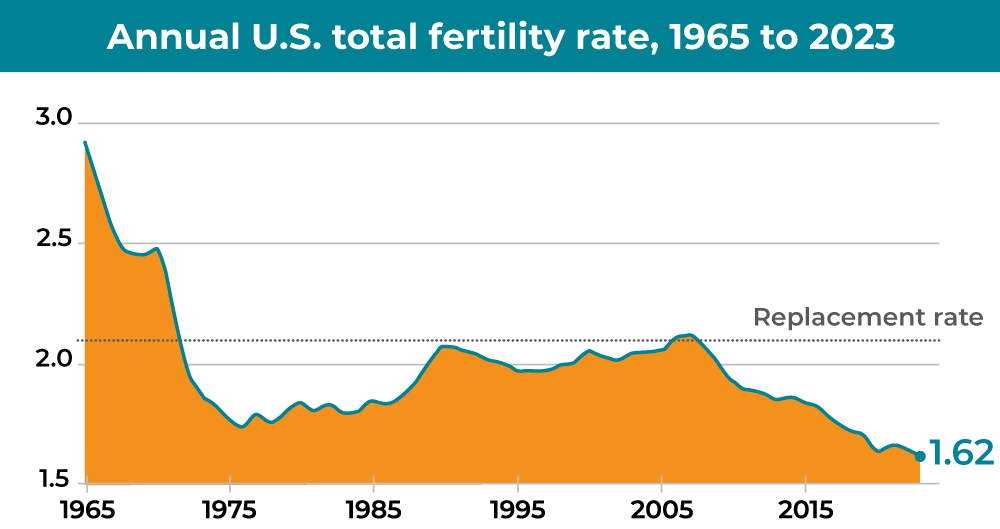
The U.S. fertility rate has long been below the replacement rate of 2.1 that would maintain the population without migration. Statistics from 2023 indicate we’ve hit an all-time low of 1.62.
My goal in writing this paper has little to do with analyzing or solving this problem or explaining the reasons why it’s happening. Much has been written about the graying of most of the world’s industrialized nations. My aim is to highlight that demographic realities make the U.S. dependent on foreign-born migration to compensate for population declines and meet the needs of our workforce. This has been the case for the past 50 years, and the situation has become more acute.
Declining Immigration Rates
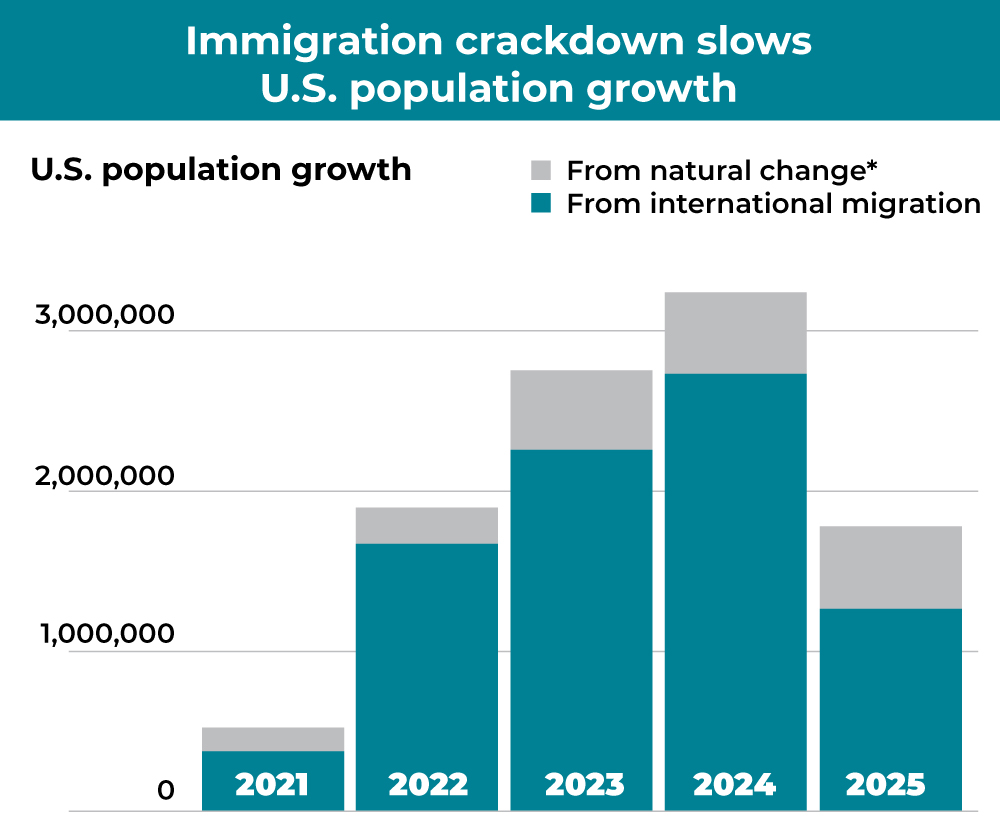
Given national politics surrounding immigration and the nation’s crackdown on illegal immigration, 2026 is likely to be the year with the lowest net immigration in modern history, excluding the years of the COVID pandemic when international migration was paused. (The slowest population growth since our nation’s founding occurred in 2020-21, when international migration to the U.S. dropped to 376,000.)
Other than during the 2020-21 pandemic timespan, U.S. population growth for decades has been 80% immigrant-driven. For the year from June 30, 2024, through July 1, 2025, U.S. Census Bureau immigration totals report only 1.26 million registered immigrants, considerably lower than the 2.73 million that entered during the previous 12 months. The New York Times reported on January 27, 2026, that we’re on track for immigration lower than during the pandemic.1
If this plunge in immigration rates continues, the impact will further magnify the significant impact our nation’s decreasing birth rate will have on the size of our future workforce. It’s no wonder that prominent conservative politicians are actively encouraging U.S. citizens to have more children.
Shrinking Workforce Size
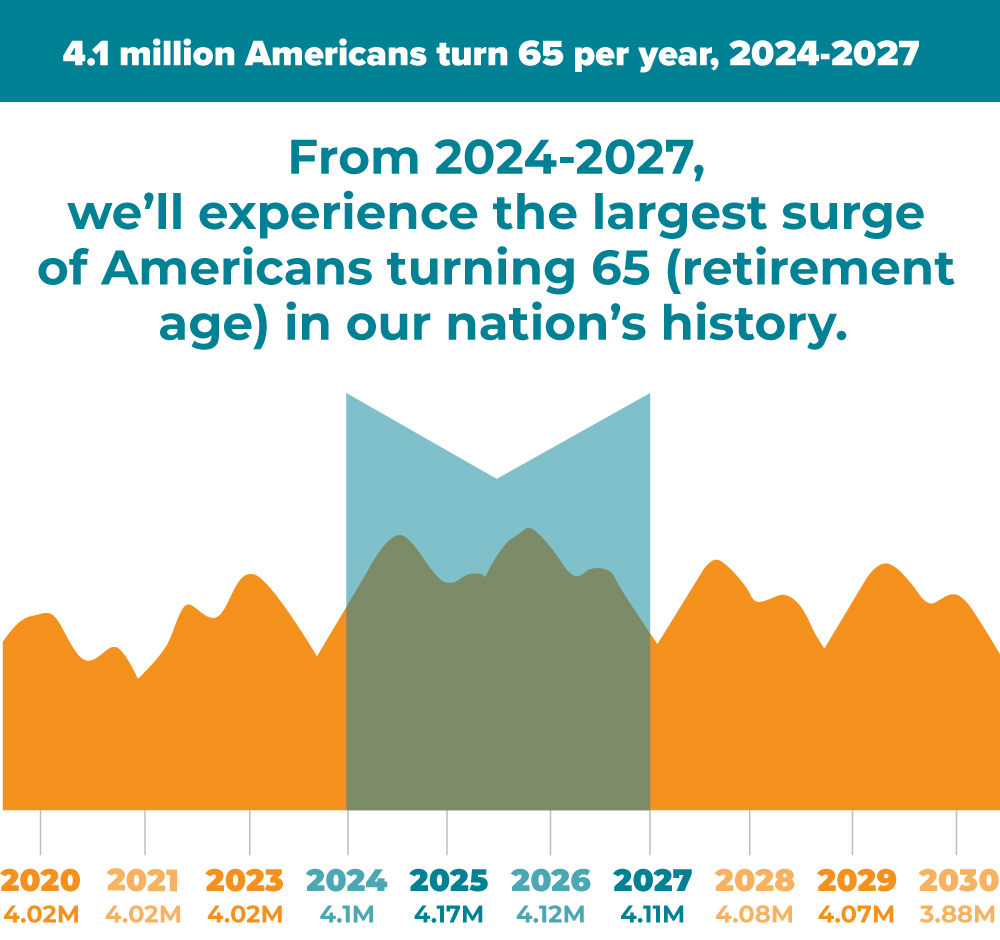
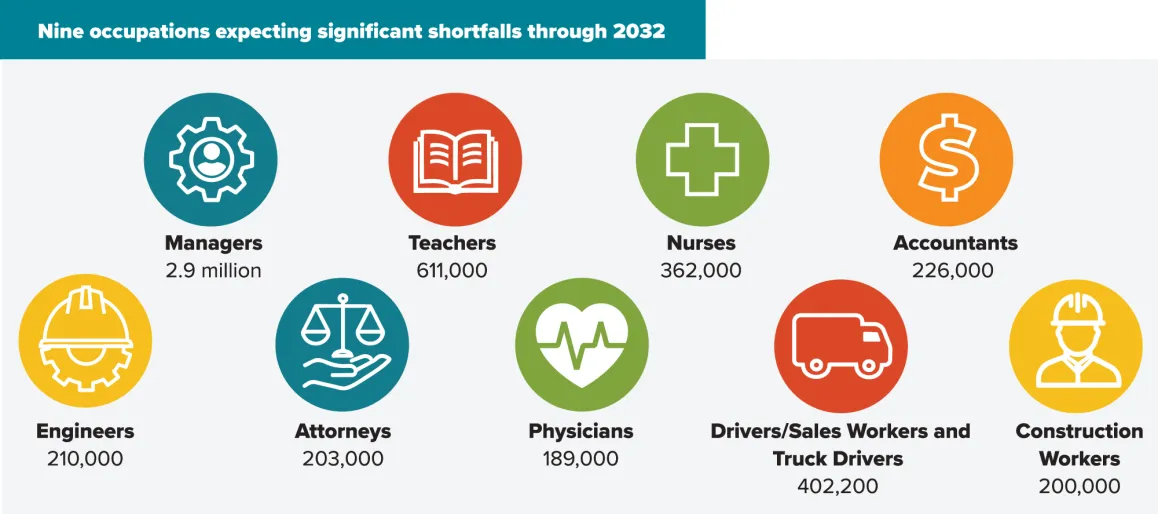
By the year 2030, every baby boomer will be at least 65 years old. 2026 falls during the peak of this generational shift, with more than 11,200 baby boomers turning 65 every day from 2024 through 2027. The impact on the workforce of this number of people reaching retirement age is that in the next few years, much of our nation’s expertise and leadership will be retiring. This is one of many reasons why the Georgetown Center for Education and the Workforce (CEW) estimates the occupation of manager will soon be the No. 1 most in-demand job category in the nation, with a shortage of nearly 3 million expected by 2032.
According to the Georgetown CEW 2025 study, Falling Behind: How Skills Shortages Threaten Future Jobs, from 2024 through 2032, 18.4 million experienced workers (ages 55-64) with post-secondary education will retire, far outpacing the 13.8 million younger workers (currently ages 16-24) entering the labor market with equivalent educational qualifications.
To compensate, Georgetown CEW predicts the United States will need 5.25 million more workers with education and training beyond high school, with 4.5 million workers needing a bachelor’s degree or higher. Another 750,000 will need “middle skills,” requiring some post-secondary training beyond high school. Middle skills can include an associate degree, a vocational certificate, or some college but no degree. (Registered apprenticeship programs also fit in this category.)
Economists predict that by 2032, we will have a surplus of only 131,000 jobs for workers requiring only a high school diploma. Automation, artificial intelligence and immigrant workers will more than fill the jobs that don’t require employees to have post-secondary training and skills.
In the past decade, this nation has focused on the need for more of our youth to enter the skilled trades rather than go to college. This message has been heard: the number of students enrolling in some sort of college within a year of graduating high school has dropped significantly, from about 68 percent in 2014 to roughly 63 percent in 2024.
As the boomers have been retiring and technology has become more sophisticated, however, the U.S. workforce needs to adapt. With fewer people in the workforce and a growing need for more skilled workers, it’s become critical for us to encourage as many students as possible to pursue a formal post-secondary path. We will no longer have the luxury of allowing roughly 30% to 40% of young people to graduate high school and enter the workforce without any sort of training or experience. To prevent developing significant bottlenecks in productivity across industry sectors, we must maximize each and every young person’s abilities, making sure they learn marketable skills they can take with them for life.

Declining Academic Preparedness
At first blush, the rising number of high school graduates is a promising metric. But digging deeper into other academic indicators reveals growing concern that a high school diploma doesn’t reflect the academic standards of years past. Consider the following statistics.
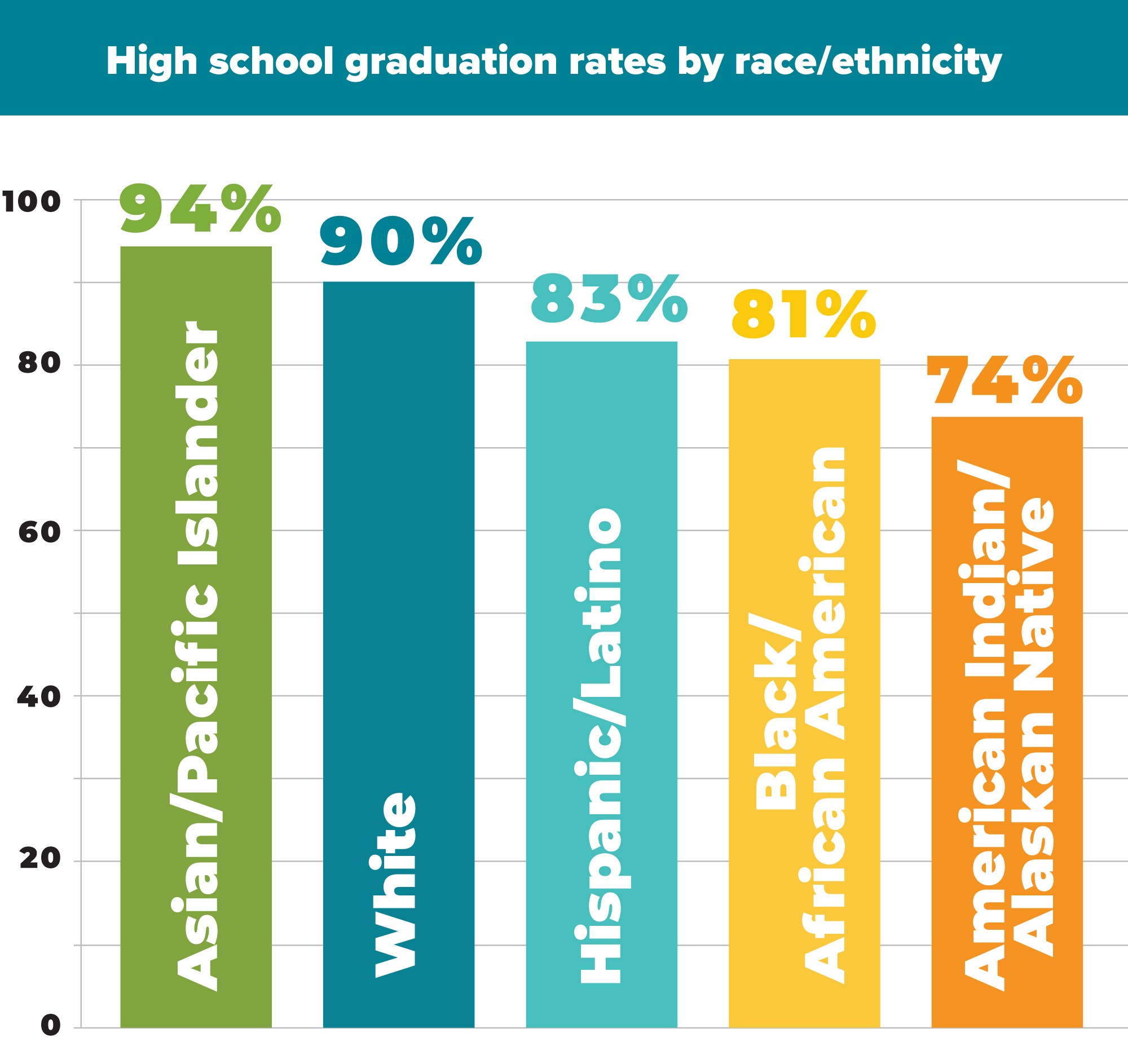
Gaps in high school graduation rates by race/ethnicity are notable.
Using 2022 data, we can see that while Asian/Pacific Islander (94%) and white students have a high school graduation rate at 90% or higher, only 83% of Hispanic/Latino, 81% of Black/African American students and 74% of American Indian/Alaskan Native students graduate. As we approach 2030, it’s frustrating that the color of a young person’s skin remains a strong predictor of their professional success. But it is.
A discrepancy of 5% exists in high school graduation between young women (90%) and young men (85%).
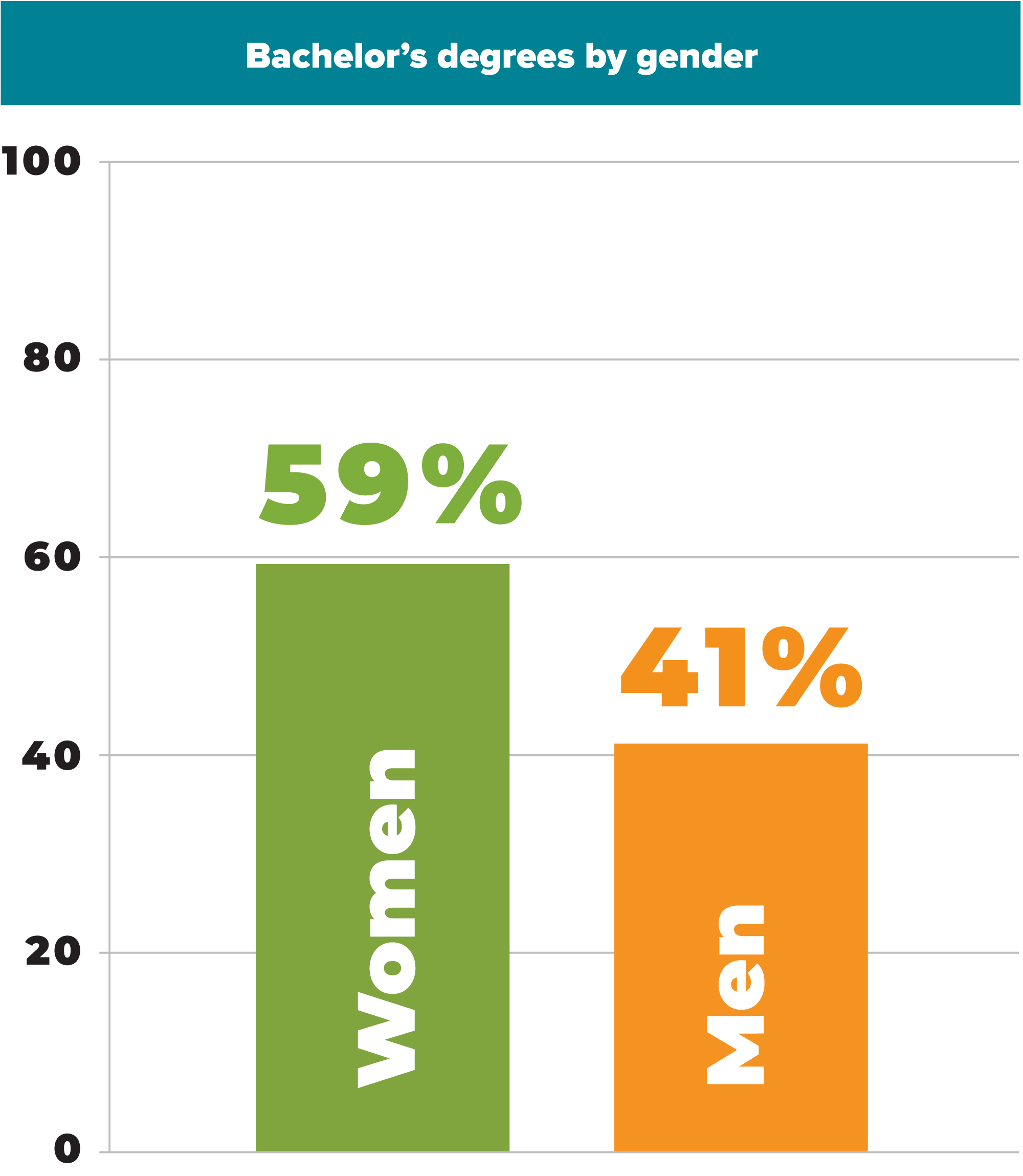
Young men lag behind young women today in attaining most academic credentials, including bachelor’s degrees. National Center for Education Statistics data from 2021 shows that 59% of bachelor’s degrees were conferred to women, while only 41% went to men. While young men without skills or degrees can potentially find jobs in the blue-collar economy, many will struggle to reach the middle class without some post-secondary education and training. We must reverse this trend and re-engage young men in achieving post-secondary training.
Completion rates aside, evidence indicates that graduates are finishing high school less prepared for their next step.
On the 2023 ACT exam, for example, only 21% of all test takers passed all four college readiness benchmarks — and 40% didn’t meet any of them!2
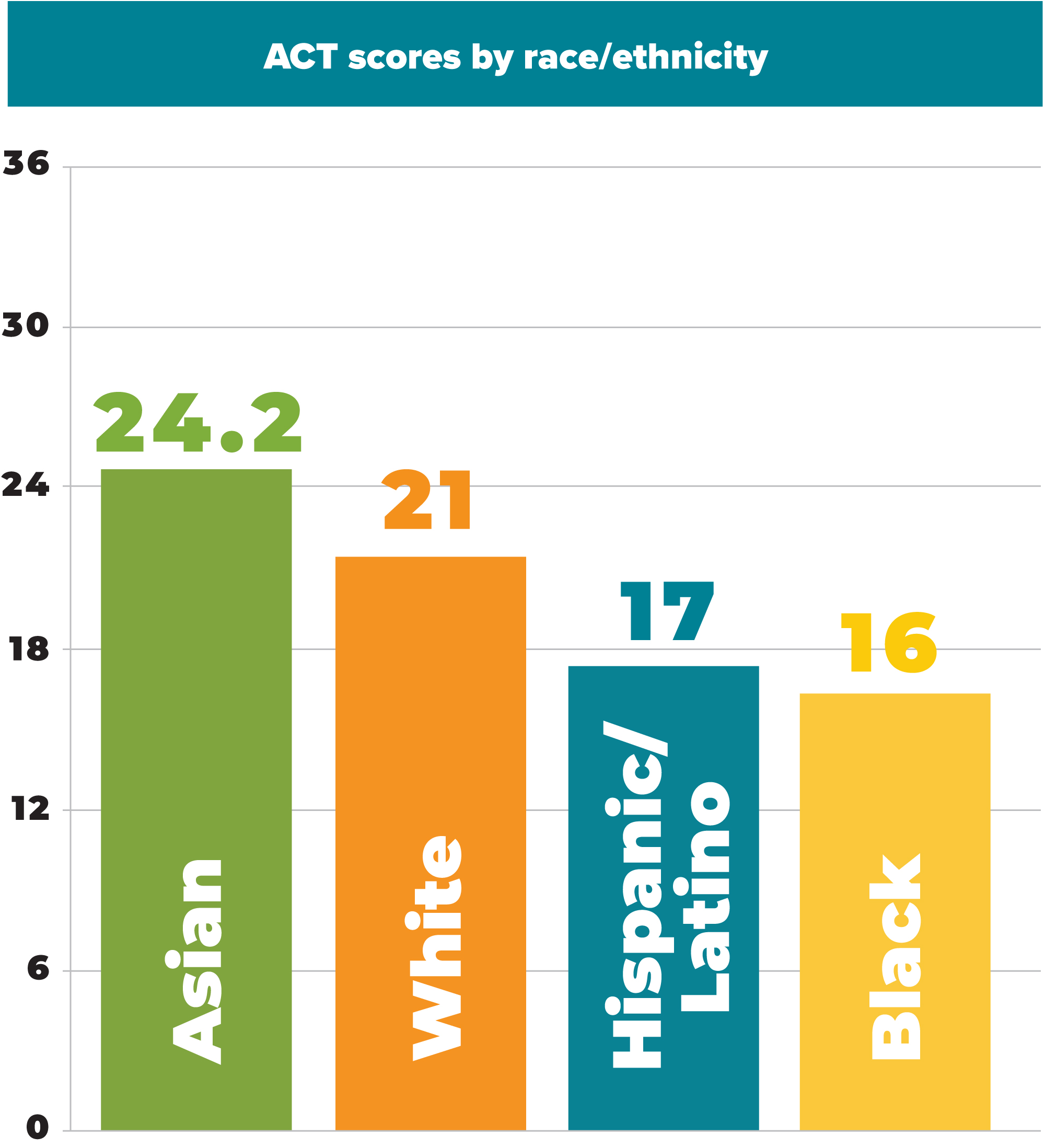
ACT can also point to student results varying by race and ethnicity as well as gender. When composite scores are divided into racial categories, Asians score an average of 24.2 and whites score an average of 21, with Hispanic/Latinos at 17 and Black students at 16. Young women as a group have consistently scored approximately 0.5 to 1.0 higher than young men over time.
High-stakes testing is just one of many indicators of post-secondary success. With growing numbers of students needing remediation before completing their college courses, colleges are also concerned about overall preparedness. According to the U.S. Department of Education, four in 10 first-time college students will take at least one remedial course. That number is as high as 65% for students in community college.
Given that our workforce needs are greater than ever before, this lack of academic preparedness for whatever direction a young person chooses after high school has significant implications. When students must take remedial classes, the total per-credit cost of their college study increases, and the time it takes them to complete their program of study lengthens — thus delaying their entrance into the workforce.
No one is arguing that improving K-12 education could better prepare our young people — especially people of color and young men — to enter the future workforce.
The question now becomes, what are we going to do about it, and how are we going to implement changes equitably and effectively nationwide?
Declining College Graduation Rates
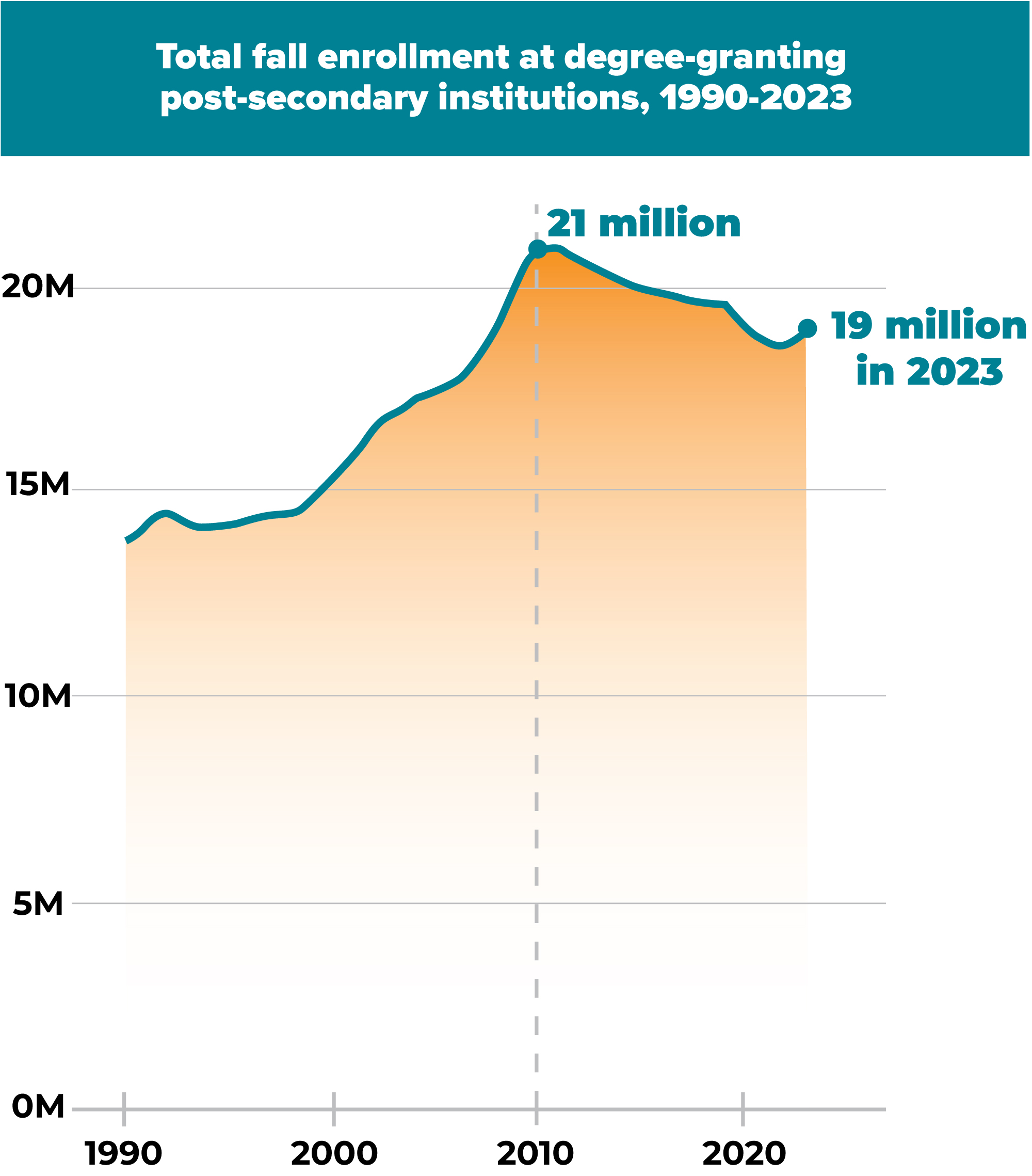
Until the past decade, the United States was in a period of high college degree attainment. College enrollments rose for 40 years from 1970 through 2010, when 21 million students were enrolled — a rate of growth that was more than 5.5 times the rate of population growth for 18- to 24-year-olds in the same period.3 As a nation, the percentage of U.S. adults over 25 with at least a bachelor’s degree is higher today than at any time in history (38%), compared to about 30% in 2010.4 These numbers include everyone living, not just those actively in the workforce.
Due to rising tuition, the impact of the pandemic and intentional5 changes in perceptions of the value of a college education, college enrollment for our younger generations dropped for 11 years starting in 2010.6 While the U.S. Department of Education predicts we’re now seeing a reversal of this trend, it’s looking like enrollment numbers by percentages of the population will still be lower in the coming years than they were in 2010 — and that has much to do with some significant changes in our nation’s demographics.
The U.S. simply has fewer young people than it has in any generation since World War II.
Generations Z and Alpha are smaller due to declining birthrates, a problem also facing many other nations in Europe and East Asia as well as our Canadian neighbors. The graying of many first-world nations is a global concern as populations scramble care for senior citizens without enough young people to sustain the economy. Without immigration bringing new people into the U.S. workforce, we’d have felt our workforce pinch even sooner.
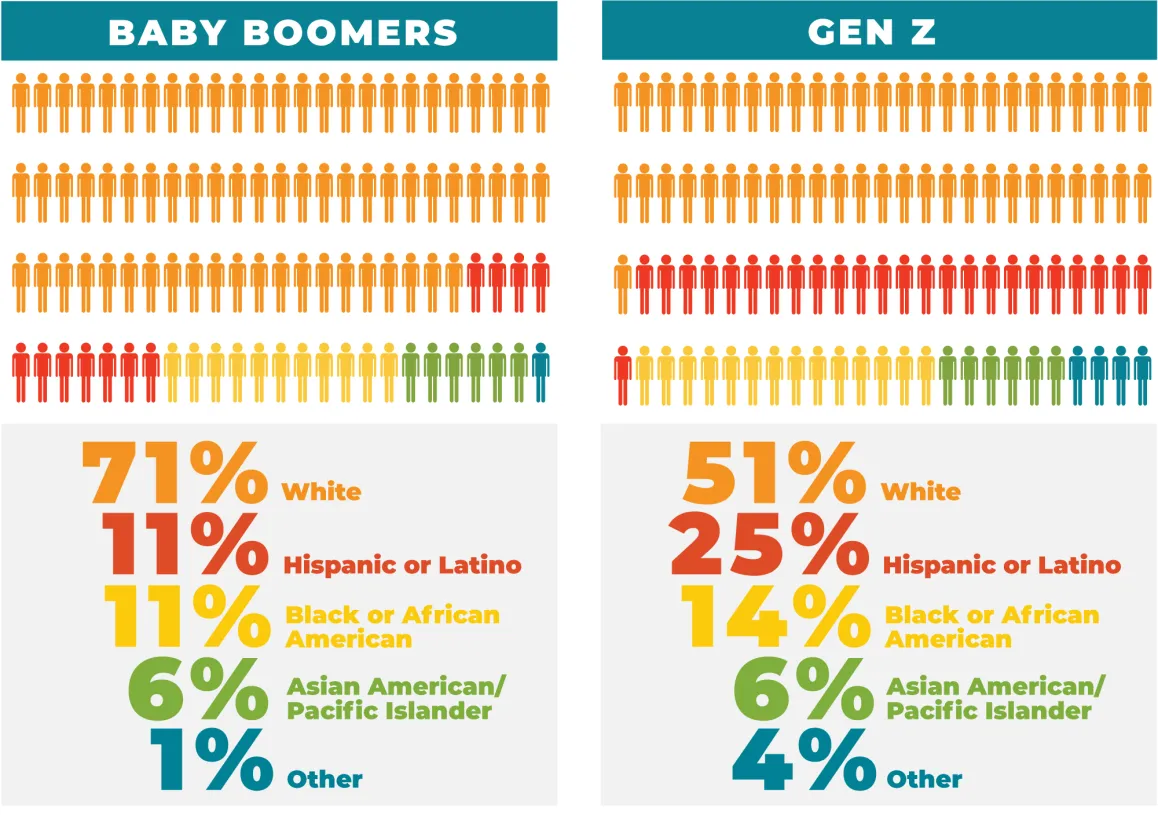
Gen Z is significantly more racially and ethnically diverse than the baby boomers, which means today’s college students come from a wider range of racial/ethnic backgrounds.
According to U.S. Census data, baby boomers in the United States were about 72% white, while Gen Z is approximately 50% white. All other racial and ethnic groups in Gen Z are significantly larger in size than they were in the baby boomer generation. The same holds true for their younger brothers and sisters coming behind them in Generation Alpha, which is even smaller.
Racial/ethnic groups that historically have had the lowest college completion rates are the same groups experiencing the rising enrollments.
Completion rates for Hispanic/Latino students (54%) and Black students (40%) are significantly below the 74% of Asians and 64% of whites who graduate within six years of entering a bachelor’s degree program.7 By 2030, white college enrollment is expected to increase by only 3%, and enrollment is expected to decrease 7% for Asians/Pacific Islanders. The largest increases are expected to be among Hispanic/Latino students and Black/African American students, many of whom will be first-generation college students.
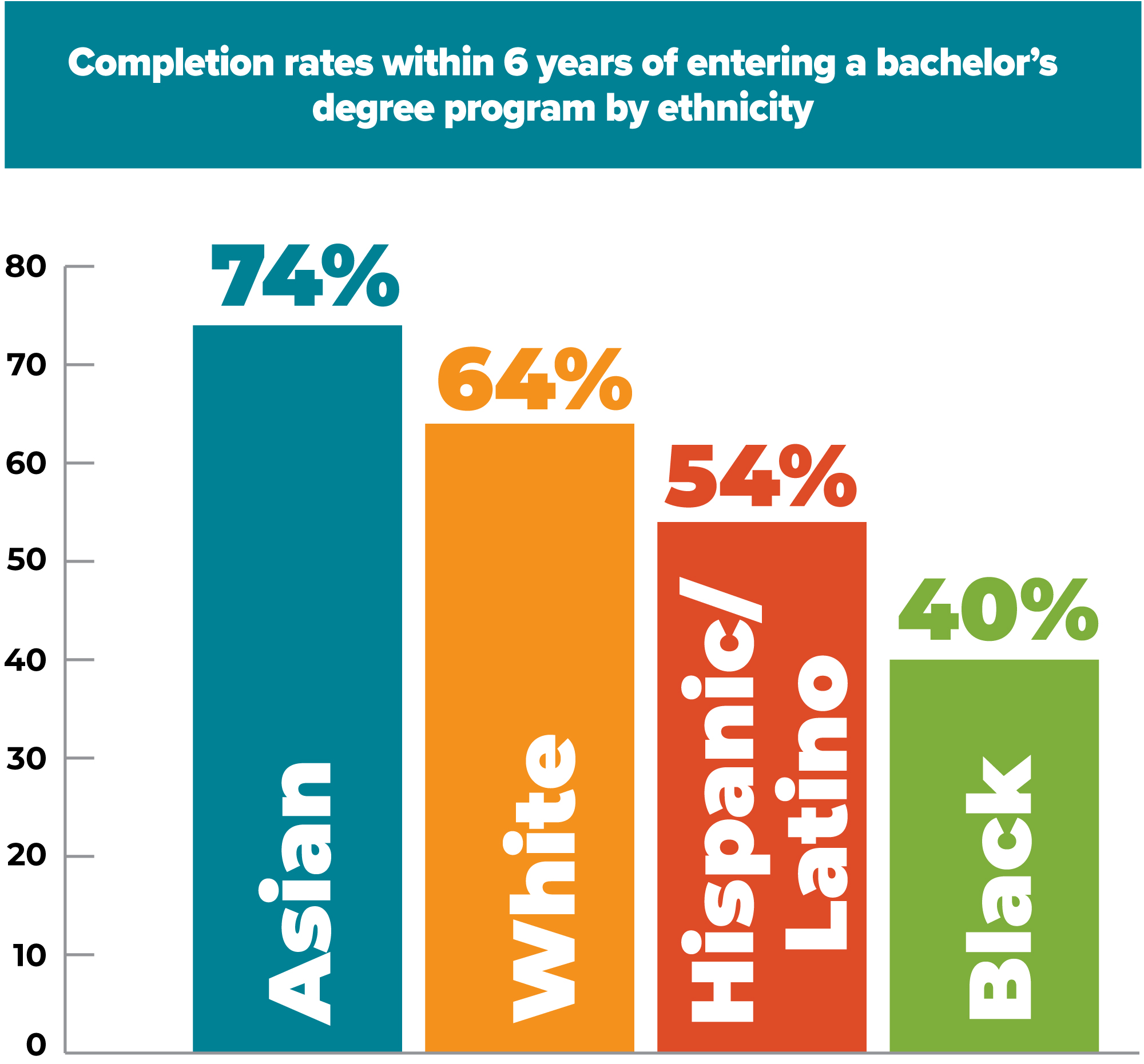
Given the diversification of U.S. demographics and the decreasing population of young adults, it makes sense that to ensure a higher number of our young people will enter the workforce with post-secondary skills, we’ll need to dramatically grow the number of students from minority subgroups who succeed in two-year and four-year colleges. Whatever initiatives are implemented, they must start in K-12 education and follow students into their post-secondary education and training.
But one more key question needs to be asked: How do we funnel students into the right career paths?
Misaligning Student Interests vs. Jobs
Students must not only succeed in K-12 and post-secondary pursuits, but they also must be informed about how and why they should choose career paths to fill the needs of the greater workforce. In a different Georgetown CEW study from 2024, The Great Misalignment, authors suggest that in half of local labor markets nationwide, at least 50 percent of all middle-skills credentials need to be conferred in different fields of study for the distribution of credentials to match projected labor demands in 2031.
This misalignment is highest in rural markets — a problem that may be magnified, in part, by colleges in rural markets struggling to find qualified faculty to teach certain courses.
For decades, students have been left to make up their own minds about post-secondary paths or encouraged to follow their passions, but the outcome of this approach is a workforce that is out of step with the jobs offered in the economy, as indicated by the number of underemployed arts and psychology majors. While no one wants to squelch children’s dreams, the truth is that the investment in post-secondary education doesn’t pay off for many young people who choose a path they simply enjoy, leaving them — after two, four or even six years of academic study — with degrees that won’t secure employment, forcing them to seek work in other non-related pursuits. According to LinkedIn estimates, within 10 years of college graduation, only 27% to 40% of adults are working in fields related to their degree.8
Given the quickly escalating costs of undergraduate tuition, it makes sense that a large percentage of today’s young people begin their post-secondary journeys at a local community or technical college, fully intending to transfer to a four-year college or university after earning an associate degree or completing general education courses. However, nearly 30% of these students earn associate degrees in subjects that don’t prepare them for a specific occupational cluster, such as liberal arts, general studies and humanities — and many never end up transferring. Research shows that only 21% of these students eventually transfer to a four-year university (42% for those studying humanities).9
We need to make sure a higher percentage of these associate degree students successfully matriculate to a four-year college — or we need to do a better job of funneling them into two-year degree programs that yield marketable workforce skills. (Georgetown CEW’s Falling Behind study suggests that of middle skill jobs, transportation, logistics and construction are the non-bachelor’s degree clusters with the greatest need for more workers.)
The misalignment between credentials obtained and U.S. jobs doesn’t stop with associate degrees. Many of the top academic areas U.S. bachelor’s degree students pursue also don’t align well with workforce needs.
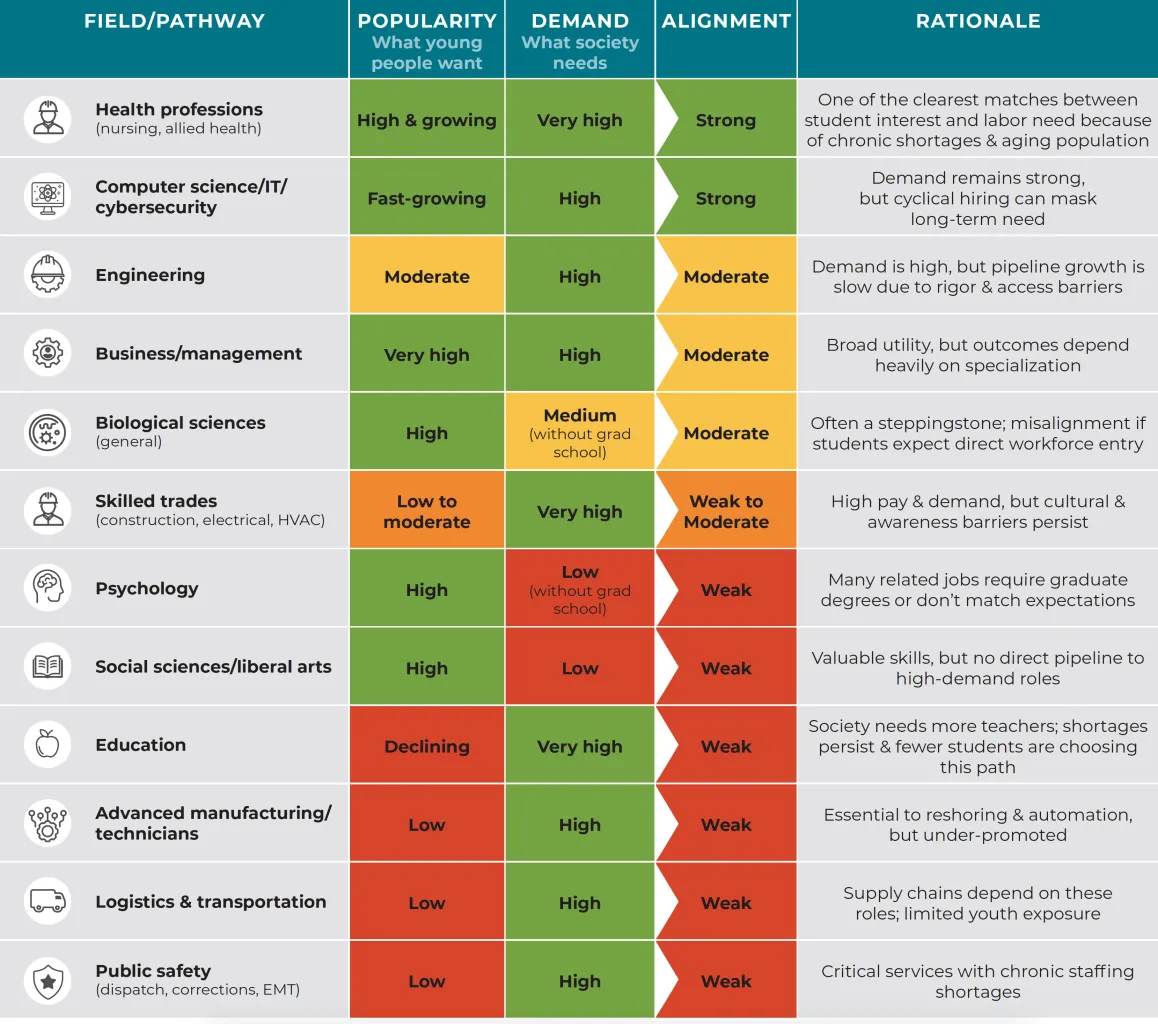
• What young people want: Share of bachelor’s degrees by major (NCES/IPEDS, 2021–22, proxy for 2024-era majors) via National Center for Education Statistics
• What society needs: Occupational demand, shortages, and projected openings via U.S. Bureau of Labor Statistics and widely cited workforce analyses
Through better career counseling at both the high-school and post-secondary level — and possibly other types of incentives using tools such as student loans, scholarships and earn-to-learn programs like apprenticeships — we must do more to persuade students to pursue high-demand professions, such as the following nine broad industries facing significant vacancies over the next six years.
The Bottom Line
Over the past few decades, we’ve dug ourselves a big hole — one we can’t keep ignoring because there isn’t one clear-cut, easy answer. From my perspective, 2026 is the perfect year for us to truly step up to the challenge. We must engage K-12 students in learning again. Although solutions are complex, giving children and teens a better idea of the endgame will help. From the preschool years on, we need to help kids understand why the work they do every day in school matters — that it culminates in achieving a fulfilling, meaningful, well-paying career for them when they become an adult.
A huge part of the solution will depend on inspiring more bright, talented, and hardworking people to go into education as a career — and to do so, we must give them the respect and compensation they deserve. Teachers lay the groundwork from which all other career paths grow. Without great teachers working on our behalf in our classrooms, all other efforts will be for nothing. Georgetown CEW predicts we’ll need 611,000 additional teachers in our K-12 and college classrooms by 2032, which is an intimidating number to gain in merely six years. Incentivizing more young people and retooling adults to enter education needs to become a top priority in Washington, D.C., if we’re going to have a chance of meeting our workforce challenges. Without highly trained and motivated professionals in our classrooms, we don’t stand a chance.
Teachers also need the right tools to help students learn. They need tools to ensure young people are fully aware of and excited by possible paths they can take after high school that will not only pay them well but also empower them to become a critical part of our future society. Students can’t dream about having a career if they’ve never heard of it!
The topics we’ve discussed here are huge challenges — so huge, in fact, that the current administration wants to close the U.S. Department of Education and start fresh! However we ultimately choose to combat these significant problems, the path forward will require visionary leadership, a clear strategy, consistent oversight and a long-term commitment that must not be interrupted or swayed by the mechanisms of partisan politics. It’s just too important.
In publishing America’s Talent Strategy in 2025, the federal departments of Labor, Commerce and Education have proposed a “streamlined, coordinated system that delivers unified workplace services.” This plan leans heavily on industry to identify occupations, validate training models and steer investments toward roles and credentials that matter most. It proposes scaling registered apprenticeships, aligning education with the needs of the workforce and modernizing career and technical education. Such industry-based tactics can and will move us forward if we properly fund, prioritize, organize and sustain the necessary government oversight of this initiative for the long term — and if students can be persuaded to follow the paths we need them to take.
This gargantuan challenge is possibly the biggest facing the United States. I sincerely hope we have the resources, commitment and dedication necessary to see the work through. Our economy — the foundation of our nation’s future — is riding on it.
Sources
1 Adleson, Jeff and Tavernise, Sabrina. “US Population Growth Slows Sharply as Immigration Numbers Plunge.” New York Times. January 27, 2026.
2 Sparks, Sarah D. “Only 1 in 4 High School Graduates in 2023 Fully Prepared for College.” Education Week. October 11, 2023.
https://www.edweek.org/teaching-learning/act-only-1-in-5-high-school-graduates-in-2023-fully-prepared-for-college/2023/10
3 U.S. Dept. of Education, Digest of Education Statistics, Table 303.25, 2021. Quoted in Georgetown CEW’s Falling Behind.
4 U.S. Census Bureau’s American Community Survey. Quoted in Georgetown CEW’s Falling Behind.
5 I used the word intentional here because of consistent efforts over the last decade to revive interest in the skilled trades. These declines were owing both to economic factors and growing social acceptance of young people pursuing paths besides attending college.
6 U.S. Dept. of Education, Digest of Education Statistics, Table 303.25, 2021. Quoted in Georgetown CEW’s Falling Behind.
7 U.S. Dept. of Education, Digest of Education Statistics, Table 303.25, 2019. Quoted in Georgetown CEW’s Falling Behind.
8 Prystaj, Walter. What Percentage of College Graduates End Up Working in their Field of Study 10 Years After Graduation. March 7, 2025. https://www.linkedin.com/pulse/what-percent-college-graduates-end-up-working-field-study-prystaj-e45pe/
9 Georgetown University CEW analysis of data from the U.S. Dept. of Education’s, Beginning Postsecondary Students Longitudinal Study (BPS), 2012, 2014 and 2017. Quoted in Falling Behind.